Building your own unique DIY caravan is very different from simply going to a caravan dealer and buying an existing van. Your DIY Caravan Design gives you the freedom to focus on what you want and what will work best for you, rather than simply choosing from what is already available.
The design stage can feel challenging at first, particularly if you’re not familiar with caravan construction or the RV industry. The best approach is to take your time, start with the basics and gradually develop your ideas into a practical layout and specification.
Start with your basic ideas

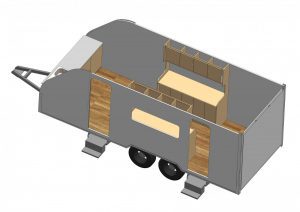
Start with a blank piece of paper – or CAD software if you prefer – and sketch out a basic caravan layout.
At this stage, don’t worry about getting every measurement perfect. Think about the major components, approximately how much space they will require and how you intend to use your caravan.
Consider:
- How many beds do you need?
- Do you want an internal bathroom and shower?
- Do you want an internal or external kitchen?
- How much storage will you need?
- How much water do you intend to carry?
- Will you mainly stay in caravan parks or travel off-grid?
- Will you carry bikes, tools or other equipment?
It can also be helpful to make two simple lists: your must-haves and your definitely-don’t-wants. For example, you may want the bathroom close to the bed but prefer not to have a cooker inside.
Work out your caravan size
Your layout or floor plan will largely determine the dimensions of your caravan. Once you have a rough layout, you can start working out what size caravan shell you will require.
Consider:
- Overall body length
- Width
- Internal ceiling height
- Required storage space
- Ground clearance
- Whether the caravan will be designed primarily for on-road or off-road use
Your tow vehicle also needs to be considered. Check its towing capacity and determine the maximum caravan mass you have available to work with. You may find that your existing tow vehicle places practical limits on the size and weight of your proposed caravan.
Remember that water, batteries, appliances, cabinetry, equipment and everything you carry will contribute to the finished weight.
Develop your DIY Caravan Design & floor plan
Once you have established the approximate size of your caravan, start positioning the major components within the available space:
- Bed
- Bathroom and shower
- Kitchen
- Fridge
- Seating
- Storage areas
Think about how you will actually use the caravan rather than simply how the layout looks on paper. Check walkways, door openings and access to frequently used storage.
Visiting local caravan and RV shows can also be a great source of ideas. Looking through different layouts can help you identify features that appeal to you – and just as importantly, features you don’t want.
Many DIY caravan projects begin because the combination of features the owner wants simply isn’t available in a standard production caravan.
Think about your main systems early
Once the basic layout starts taking shape, consider where the major systems and components will be located.
These may include:
- Fresh and grey water tanks
- Batteries and electrical equipment
- Plumbing and water pipes
- Hot water system
- Air conditioner
- Fridge
- Gas equipment, if applicable
- External hatches and service doors
Planning these areas early helps ensure that the different parts of the design complement each other. For example, your chassis and cabinetry design should allow suitable routes for 12V cables and water pipes rather than trying to find space for them later.
Weight distribution should also be considered when positioning heavier components such as batteries and water tanks.
Consider your chassis, suspension and intended use
Think about what you intend to do with the caravan and where you intend to take it. A caravan primarily used on sealed roads has different requirements from one intended for extensive off-road travel.
Consider:
- On-road or off-road use
- Single or tandem axle
- Suspension requirements
- Ground clearance
- Expected loaded weight
- Tow vehicle capability
These decisions can influence both your chassis design and the rest of the caravan layout, so it is worth considering them early in the planning process.
Choose your construction method and materials
Once the overall design is becoming clearer, start considering how the caravan will actually be constructed.
Your choice of chassis, wall and roof construction, cabinetry and other materials will affect the finished weight, strength and overall design.
It is helpful to start developing a basic materials list at this stage. This makes it easier to see how the different parts of your build need to work together before you begin ordering components.
If you’re planning to build with composite panels, our guide to getting started with a composite panel project covers the next steps in more detail.
Check the relevant requirements
Your DIY caravan will also need to comply with applicable Australian regulations and standards. Requirements can affect areas such as:
- Dimensions and weights
- Braking
- Lighting
- Electrical installations
- Gas installations
- Ventilation
- Registration
Consider these requirements during the design stage rather than trying to accommodate them after the caravan has been built.
The Australian Government provides further information about vehicle standards and regulation.
Turn your ideas into a draft specification
Once you have established your approximate dimensions, floor plan, target weight and major systems, your DIY Caravan Design starts to become a practical build specification:
- Caravan dimensions
- Floor plan
- Target weight
- On-road or off-road requirements
- Major appliances and systems
- Construction method
you have the beginnings of a useful draft specification.
From here, you can start developing more detailed drawings and work through each aspect of the design individually.
Take your time during this stage. Good planning at the beginning can make the entire DIY caravan build considerably easier.
DIY Caravans can help if you have questions about components or materials for your DIY caravan project. Use our contact form to get started, and send through your project details so we can help identify suitable products for your build.